 Beezz Fryer
Beezz Fryer
Beezz Fryer
Using an air fryer instead of a conventional oven can make everyday cooking faster, especially for small portions. Its compact chamber heats quickly, while the fan moves hot air around foods such as chicken thighs, roasted vegetables, and frozen pastries. The result is often a crisp surface with less preheating time. Size matters.
In practical testing, I have found that an air fryer works best when the basket is not crowded. A single layer of potato wedges browns more evenly than a packed basket. Small dishes also need shorter cooking times than conventional oven recipes suggest. Check the food early. A kitchen thermometer provides more reliable results than appearance alone, especially with poultry and thick meat.
So, can an air fryer replace a conventional oven? Sometimes, but not completely. It can handle quick meals, reheating, roasting, and modest baking projects. However, a conventional oven remains more useful for large casseroles, multiple trays, tall cakes, and family-sized meals. Manufacturer instructions should guide temperature limits, cookware choices, and cleaning requirements. Heat behaves differently. Air fryers may cook unevenly when food blocks the airflow, and some recipes need careful adjustment. I have also over-browned breaded food by trusting the original oven timing. That mistake is easy to repeat. This guide explains how to adapt temperatures, reduce cooking times, choose suitable containers, and avoid common safety problems. It also considers energy use, texture, capacity, and the moments when switching appliances simply creates extra work.
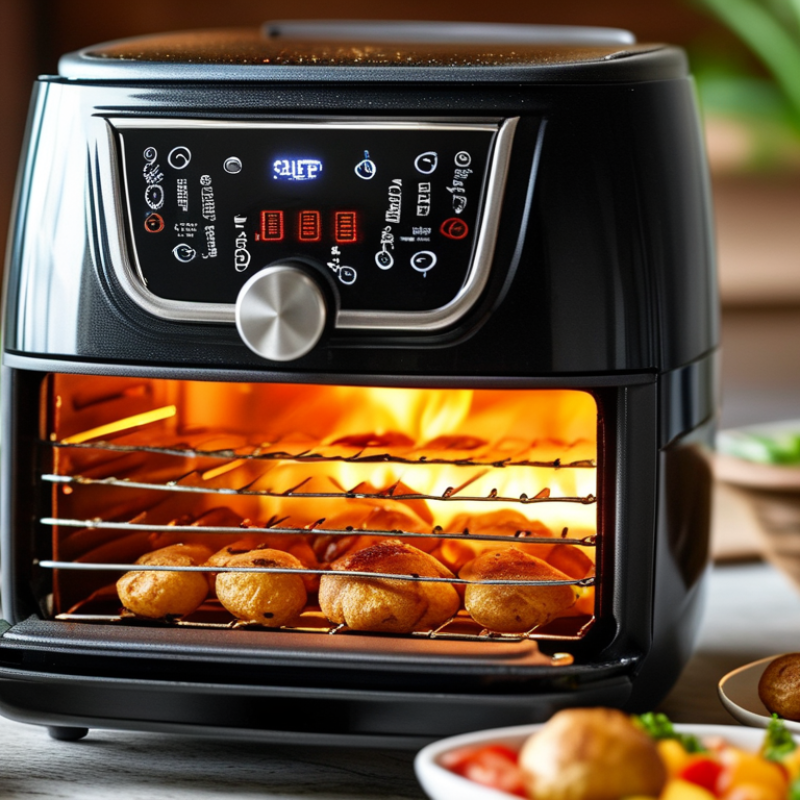
How to Use an Air Fryer Instead of a Conventional Oven
Before converting any recipe, check the air fryer’s capacity, wattage, and basket limits. The U.S. Department of Energy lists conventional electric ovens at roughly 2,000–5,000 watts. Many countertop air fryers use about 1,200–2,000 watts, but lower wattage can mean slower browning. Energy Saving Trust comparisons also show that smaller cooking appliances often use less energy for short meals, especially when preheating is limited.
Capacity matters more than the advertised number. A four-liter basket may hold only two chicken breasts without crowding. Leave space around each piece so hot air can circulate. Do not stack wet food deeply. A packed basket may produce pale surfaces, uneven centers, and longer cooking times. Check the manual’s maximum food weight, too. Basket size is not the same as usable capacity.
I usually reduce the oven temperature by about 15°C and begin checking 20% earlier. That is only a starting point. A 200°C oven recipe may need 185°C in the air fryer, but thick vegetables can still require extra time. My first conversion often overcooked thin edges. I now test one portion before cooking the entire batch. Use a probe thermometer for meat, because crisp-looking food can remain undercooked inside. Avoid covering the basket with foil unless the instructions allow it. It can restrict airflow. There is room for error.
: Lower the temperature by about 25°F, or 15°C. Reduce cooking time by roughly 20%. A 400°F recipe for 25 minutes may become 375°F for 20 minutes. Check the food early. This rule is only a starting point.
Basket capacity can be smaller than its advertised volume. A four-liter basket may hold only two chicken breasts comfortably. Leave gaps around each piece. Crowded food cooks unevenly and develops pale, soft patches.
Use one loose layer when possible. Keep small spaces between wings, vegetables, or fish pieces. Avoid stacking wet food deeply. Air needs a clear path. I sometimes overfilled the basket and regretted it.
Preheating for three to five minutes can improve browning. It is especially useful for thicker foods. Small chambers heat quickly. You may not need preheating for every recipe.
Many countertop air fryers use roughly 1,200–2,000 watts. Lower wattage may brown food more slowly. Cooking time can change with wattage, quantity, and food moisture. Watch the food, not only the timer.
Begin checking about 20% earlier than the oven recipe suggests. For a 20-minute conversion, check around 16 minutes. Thin vegetables may finish sooner. Thick pieces may need extra time. Check early.
Cook poultry and reheated leftovers to 165°F internally. Cook fish to 145°F, or until opaque and easily separated with a fork. Measure the thickest area with a clean thermometer. Do not trust browning alone. Do not guess.
A light oil coating can improve browning. Too much oil may collect beneath the basket. Use foil only when the appliance instructions permit it. Foil can restrict airflow. I once focused on crisp edges and missed the undercooked center.
Can an air fryer replace a conventional oven? In many cases, yes, especially for small portions, roasted vegetables, baked snacks, and quick meals. Before converting a recipe, check the air fryer’s capacity, wattage, and basket limits to ensure the food will fit safely without overcrowding. For best results, lower the oven temperature by about 25°F and shorten the cooking time by approximately 20%, since hot air circulates more intensely in the smaller chamber.
Arrange food in a single layer whenever possible so air can move evenly around each piece. Begin checking for doneness earlier than the original recipe recommends, and add two to five minutes if the food needs more browning or cooking. Always verify safe internal temperatures, including 165°F for poultry and 145°F for fish. With careful adjustments, an air fryer can provide efficient, evenly cooked results while using less time and space than a conventional oven.
